Dr Sunshine update #2

MGH1

Just to add a visual, Kristine’s OR is in silvery building on the left. The last I time did any work here, the white building to the right was the main building, the red+silver are newer. Some famous Boston names attached to these.

Literally everyone we have dealt with, from surgeon to orderly have been super nice and calm-inducing.

When we were here 3 weeks ago, Kristine and I visited the Ether Dome, the 19th c surgical theater where surgery under general anesthesia was first demonstrated. It should come as no surprise that I’m the kind of guy that reads every little plaque and picture on the wall, and one caught my eye, which leads to this.

In Stephanie J. Snow’s book, Blessed Days of Anaesthesia: How Anaesthetics Changed the World (Oxford, 2008) the author asserts “In Christian theology, pain entered the world after Eve’s disobedience in the Garden of Eden and remained central to humanity”. In a Christian framework, suffering during childbirth was considered to be a necessary and permanent reminder of Eve’s sin. The biblical quote “in sorrow shalt thou bring forth children” (Gen. 3:16) was commonly enjoined as an argument to disallow the use of ether or chloroform in childbirth. Christian beliefs that to avoid pain was against God’s will were common, especially in rural America in the middle of the nineteenth century, and this too impeded the acceptance of anesthesia. Snow goes on to demonstrate that it was to a large extent women—requesting ether and chloroform during delivery—that facilitated a change in the interpretation of these biblical ideas and religious mores, ushering in an acceptance by not only society in general but the medical profession of this humane discovery.” (http://ecti.english.illinois.edu/reviews/52/vannatta-snow.html)

What is is with religion and uppity women !!??

Prior to anesthesia, surgery was a last-ditch affair, in the same realm as torture, so there was something like only one per month at MGH. I cannot adequately describe the huge surgical machine that is here now .. the logistics, the staff, the supplies, the communications … it’s going to take a while to me to really get a sense of the whole thing and digest it .. but hey, I’ve got time this week!

Mostly Set to Go

Ah, Boston.  The land where Rs either don’t exist on the end of words, or they are added when they actually aren’t there (example:  “pizzar”).  The land where you pay your toll to the Sumner Tunnel and the guy calls Jonathan “Pal.”   The land where Jonathan is kind of a folk hero because he can describe what it was like to be there during the blizzard of  ’78.  The place where, even though we lived here for many years, the antics of drivers can still surprise us.

It’s been a long day of appointments, but we are mostly ready to go now. Turns out that spending an hour+ sitting in the Chief of Neurosurgery’s waiting room is a really good way to end up feeling that you have no problems at all in the world. Today it was packed with people with shaved heads, mobility and mental challenges, and lots of stories. Just listening in made me realize that, if you ever want to be around a lot of courage, you should just go hang out in the neurosurgery waiting area. Particularly emotional for me was the young woman who has 2 stents in her brain because she was born with hydrocephalus and also shrapnel in a number of areas of her skull because she and her family survived attacks when they lived in Sarajevo. Hearing her telling her story, all the time with a face of bravery and  a  type of humor I’ve come to understand is critical to making it through these moments, put many things in my own life in perspective.

We met with Dr. Eskandar to confirm the details of the surgery. And then there was the great moment when he gave me a wink and said “See you tomorrow, shall we?” That’s a moment — when your neurosurgeon winks at you!

I was felt like a star in pre-op because it turns out that doing a lot of yoga and Nia keep your blood pressure and the rest of your body very healthy — all of those tests and numbers looked good. I have a delightful anesthesiologist (Standford Grad — Go Cardinal!) who was telling Jonathan where he could watch the youtube video on putting in a central line (I’m going to pass on that this evening).  Heard the general description of the gizmo they screw my head into so that it remains perfectly still while they do the surgery. It’s a lot to take in, and I am happy that I will not be awake for most of it.

Kind people seem to be everywhere.  Even the woman doing my blood work and my EKG told me, when we finished that she would be praying for me (and go by her church and light a candle for me).  I can’t imagine feeling more surrounded by love than I do right now.  And I love you, right back!

What is it Like to Have a Seizure?

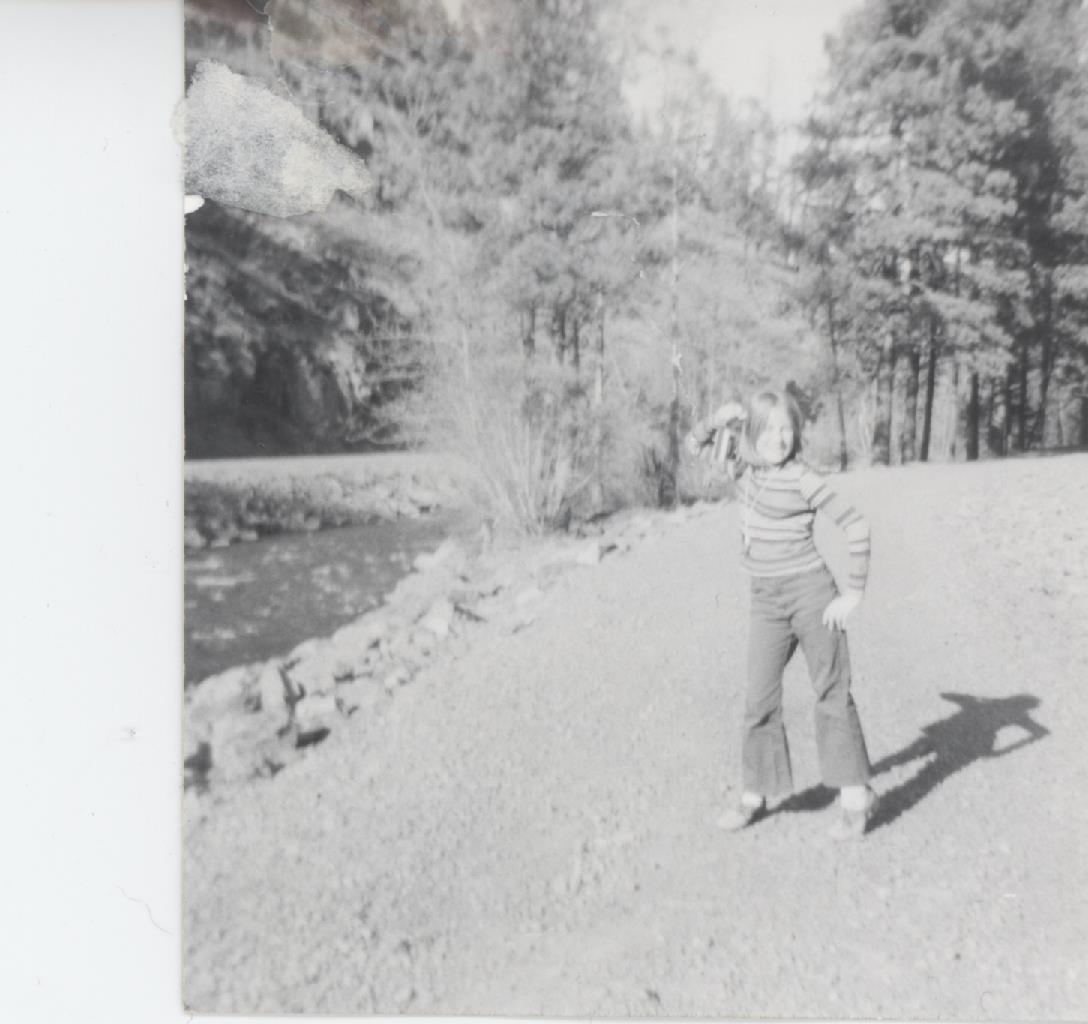
Little Kristine at camp

Little Kristine at camp

One of the things I wanted to get down, before I have surgery, are the answers to some of the questions that I’m often asked by doctors. One of them has to do with describing “the first seizure you remember.”

The reality is that most people that have the type of epilepsy I have (temporal lobe epilepsy) don’t talk a lot about their seizures, because the seizures are subtle, confusing, and they make us feel like we are crazy. My seizures begin in a very specific part of my brain.  This manifests as an intense “thought,” accompanied by a strong sense of deja vu. It was only a few months ago, when I did an extended monitoring EEG in a hospital, that I came to understand that this unique “thought” and “feeling” were indeed, an aura. An aura is a small, initial seizure.  In my case, after the aura, I have about 30 seconds  before I have a full, grand mal seizure.  I learned this because, in the hospital, I had to push a button every time I thought I might be having a seizure, and this “button pushing” exercise confirmed that I was right — every time.

Why didn’t I figure the seizure business out sooner? Because I’ve had the experience of the strange “thought” and “feeling” for as long as I can remember. Like many people with epilepsy, I never had a grand mal seizure until I hit puberty, but the “little” ones have always been a part of the way my brain works. So I never talked about it because I knew, on the one hand, that something strange was going on, and yet, this “strange thought” was also totally “normal” to me.  How do you know something is a seizure when it’s something your brain has always done?  It would be like getting a fish to understand that it is wet — how would it know anything else?

The first really memorable moment I had that was, most likely, a larger seizure, occurred when I was at a summer camp I regularly attended as a child. Camp Easterseal (later renamed Camp Roger Larson)  was on Lake Coeur d’Alene and was a camp for kids with special needs as well as kids without (back then, we thought I was one without special needs). Every year, we would go on an overnight and sleep outside under the stars. The year I’m remembering was one where I had befriended a girl in my cabin named Peggy. Peggy was hearing impaired, had seizures, and had brain damage that resulted in her having little ability to perceive physical pain. This meant that others of us would stick close by her, because she often got hurt. This particular evening, I was sleeping beside Peggy, watching over her (in my little sleeping bag with the cowboy flannel lining!). She was very scared of being out doors, and so we were snuggled up close.

All of a sudden, I remember having this strange sense, actually, a sense of absolute sureness, that everything was, is, and always will be connected to everything else.  There in my little cowboy sleeping bag, I knew, in that moment, that there was no difference between me and Peggy, no matter how “different” we seemed on the outside.  I remember feeling connected not only to  all the other sleeping campers, but the sand on the beach, the dark trees, the vast number of stars in the sky, the moonlight on the water, the endless waves.  And what was strange was that it wasn’t like having a “thought” about this, but it was an actual, physical feeling, deep down in my bones, that this was real — as real as feeling my breath moving in and out of my body.   There was a sensation of the “terrible beauty” of that knowledge — it seemed “too big” to think about for a little girl.  I also remember the strong feeling that I now know is called deja vu (but had no name for back then).  It was as if I not only knew this truth in that moment, but that I had known it  for a very long time before that moment.  I later wrote in the little hot pink vinyl diary I kept back then that it felt like “forever knowledge,” something I’d known before I had a sense of being me.

Later on, I would have that same sensation on a fairly regular basis. Years later, when I finally had my first grand mal seizure,  I finally came “out of the closet” with this strong sensation to my mother, describing to her that I was having this  thought/feeling that was a “theory about how to do anything better” . . . which had to do with knowing about the deep connectedness of things.  I now try to imagine what it must have been like for my wonderful mom trying to figure out what the heck that was about!  Back then, there was little understanding of epilepsy, and it took years for me to be diagnosed as having epilepsy (I was 18 when it was first suggested).

It turns out that what I am describing — the deep sense of universality, the strong emotion, including terrifying fear, the sense of deja vu, are all classic symptoms of temporal lobe epileptic seizures. You can break it down into some of the unique features of the temporal lobe, including the amygdala — it’s a busy area of the brain that processes language, memory, emotion, a sense of time and place, and, to some extent, a sense of connection.  It is probably also understandable why many of us who have this type of epilepsy seem to have a strong spiritual bent — I believe that spirituality and a sense of connection to that profoundly beyond ourselves, gets hard-wired into us, not as an idea, a theoretical belief, or a wish, but as a sense of something known as deeply and surely as any other experience.

I think, for many of us, it is a relief when we finally share these stories of seizures with others — others with epilepsy and/or neurologists — and they say “Oh yes, we recognize that and we’ve heard that before.” (Code: “You’re not that special!”). It’s a relief to know that others have had this same type of experience. And yet, it’s also part of the reason why Hippocrates first named epilepsy “the sacred disease.”

I have no doubt that these experiences have shaped me into the minister and yoga/Nia teacher I am today. That sense of the embodied Sacred is one I’ve always been trying to explore, explain, understand, and live out of the secret place it so often dwells and into the light of every lived day.

I hope that others who have epilepsy will take time to write about their experiences of seizures. It is so helpful to others who go through the same thing, often feeling very alone.

Game On!

424223_370573802967966_244730758885605_1246369_144721496_n

I added this picture because I like the idea of a bunch of monks saying “WHEEEE!” as they take a plunge into the unknown.  I can relate.

An update for everyone:

Jonathan and I heard back from a member of the team of doctors who have been making decisions about my surgery, and they have decided to go ahead with surgery on Tuesday, October 8th, as 12:15, as planned. Jonathan describes this surgery as “minimally invasive brain surgery,” in which they are taking out the lesion in my left temporal lobe which they believe is responsible as a starting site for the seizures. What they have decided not to do, at this point, is the more invasive surgery in which they take out larger portions of the temporal lobe and left hippocampus. The doctors are hoping that this surgery that takes “less real estate” (as they often refer to the brain) will stop or at least greatly diminish the seizures. If not, I might be facing a second surgery. However, the more invasive surgery came with more risk of significantly impacting my language and memory, and so I think we all feel good about trying this and hoping that it works (there’s a good thing to keep in your prayers!).

We are getting everything ready to head out of town shortly. Thank you to everyone who has been helping, in so many large and small ways along the way — they all feel huge. Thank you for supporting Jake and Leda (who will be here in Pullman during this upcoming week). Thanks to Chip and Trina at church, and the talented group at Aloft Yoga and Nia who have come together to teach for me and keep things going while I am away. Thanks to members of the CCUCC and UCC communities, the yoga/Nia community, the Muslim community, the St. Gertrude’s prayer chain, several LDS communities, the Hindu community, my friends who describe themselves as the “atheist well-wishers,” the Buddhist community, Native American friends, and many, many others who have let me know they will be holding me, Jonathan, Leda, and Jake close this week . . . It means a lot to us. We feel surrounded by God’s grace, your care, and the beautiful mystery that facing challenge in the midst of love brings front and center.

I have spent this past week doing some things for Jake and Leda, talking to my mom, catching up on some concerns with members of the church, planning and teaching Nia and yoga, and today I began working on an idea for my first sermon back at the church and some creative worship for Advent. I told Chip that it’s good to know that, even in the midst of a week like this, when I know something will be dramatically different inside of me next week, I still wanted to spend this week doing all of the same things I always do, because I truly love the many things I do that make up my life. I go into what lies ahead knowing that I journey with that incredible gift of feeling fully alive, and having the privilege of a life that is interwoven with so many wonderful people.

Taking a look inside

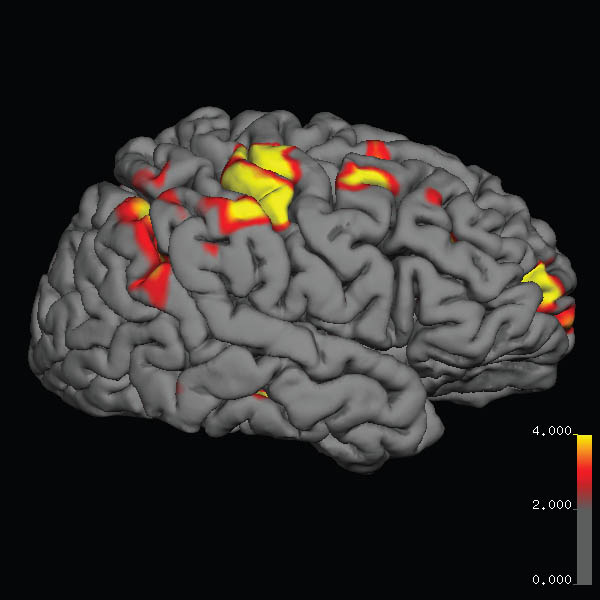
right brain all lit upI’ve had a number of beloved friends who are lately posting ultrasound images of their soon-to-be born babies . . . I love seeing those little ones.  I guess this is what you post when you get older and have epilepsy!  But whether it’s an image of a child we have yet to meet in our world, or the inner workings of our brain, there is something truly miraculous and, to me, sacred, about being able to see the inner workings of ourselves. I’ve never understood how some religious types see science as being opposed to religion and spirituality.  When I see a group of scientists and doctors who work collaboratively to create something like the image you see on the left, it’s like seeing a bit of God’s handiwork, first-hand.

This is one of the beautiful images from a functional MRI scan they did at the Mass General of the right side of my brain working away while I perform a word retrival task.  The fMRI is an interesting process — you are in an MRI tube and they flash words and images on a screen and you “think” the answer.  My biggest challenge during the fMRI was that I wanted to argue with them, or preach, about some of the things they were showing me, and they had to tell me not to move my mouth or throat.  For example, one of the tasks they have you do is to show you a noun, and you have to “think” about whether it is abstract or concrete.  The third noun they showed me was “church.”  You can only imagine everything I had to say about this.  Is “church” a concrete noun — in other words, a place, a building?  Or is it abstract — the people, the energy, the relationships?  Of course, it’s both/and, and I really wanted to preach the sermon, or at least share this with the MRI techs, right then and there.  They kindly asked me, in nice Boston accents, to just “save the sermon for lata’ ” and try and think my way through to one response.

The scans seem to show that, while I have a dominant left temporal lobe, much of my language functioning has shifted into my right frontal lobe, all of which is confusing — they don’t really understand, fully, what this means.  For over 80 percent of the population, language is exclusively in the left temporal lobe, where I have a lesion and seizures begin.  However, it’s also encouraging, because it seems to indicate that my brain already has some plasticity and began this shift awhile ago.  So next time you listen to me “go off” in a sermon or a yoga class, just blame it on my right dominant brain (and tell me, kindly, that you’ve heard enough, for now).

An Update

You will see that I am now letting “Dr. Sunshine” (aka Jonathan) post on the site as well, both so that he can keep you updated, but also because he is better at articulating some of the medical “stuff” as it comes up.
At the moment, I am still scheduled to have surgery Oct. 8th, but there is still a possibility this might change. The team of doctors that meet and “conference” my case meet on Monday afternoons, and they are not currently in agreement on exactly how the surgery should be done, or even if another test (or two) might be desirable pre-surgery. In addition, the brain scanning team finished analyzing more of their scans and have some great images of my brain to bring to the conference on Monday, so that should help all of them make decisions.
I continue to feel good about this diverse and caring team of docs, and I’m glad to have them take their time in deciding how to proceed. It’s been very interesting to learn about what’s going on inside my brain, and to realize how much it already seems to have shifted the way it works to accommodate the seizures — the simple way to describe it is that different parts of my brain seem to have taken on functions that other parts normally do, probably because of the seizure activity. It would actually be really cool to follow, if it wasn’t happening in my own brain.
As this surgery approaches, I can honestly say that I find myself having an increasingly strong sense of taking great joy and delight in very simple, everyday activities. Cleaning my office (yes, Chip also experienced joy with that!), having coffee with friends, dancing and doing yoga with the many wonderful students/friends that are a part of my life, making dinner for Jake, having a cat in my lap, walking in the rain . . . It feels very easy, right now, just to really love life and not take any of it for granted. Words also seem very precious at the moment, so I am enjoying this time that they come fairly easily (and wondering what it will be like if/when they don’t). Thanks to all of you who are part of my life, in so many ways . . . I feel well loved and surrounded by your prayers and thoughts. I’ll let you know what we find out next week.
Peace and love,
Kristine

Sunshine report #1

I was reminded by a speaker on NPR, that the 1990’s were declared, by Pres George HW Bush, as the Decade of the Brain. http://www.loc.gov/loc/brain/    Dr Tanaka at the Martinos Center was saying that in Japan, the brain is refered to as the “mystery organ”, but it was even more so just 25 short years ago. I suppose the Decade of the Brain was motivated in part because all the boomer were realizing their short-term memory was going missing, and strokes and Alzheimer’s were really picking up steam.

Prior to the 1990’s the conventional wisdom was neurons were not very good at repair/regeneration, as say the liver is.  Now we know different. The concept of plasticity became part of the vernacular. Plasticity is our friend in fact. It means that when one area of the brain is being all pissy, the function that usually goes on there can be moved, as if by magic, to somewhere else, to friendlier turf. Yay brain!

By the way, need I point out that not that long ago, bipartisan support of government-funded scientific research was non-controversial?

Stay tuned!

Dr Sunshine

Brain scans galore!

20130911_171535So, you may wonder, what does it look like when you spend a week getting multiple types of brain scans?  Here’s a couple from my trip to the Martinos Center in Charlestown, Massachusetts, last week.  The Martinos Center, a research facility connected with Massachusetts General Hospital, Harvard, and MIT  has an amazing  staff of people who were incredibly kind to Jonthan and myself as I went through several days of non-stop testing.  It’s a lot of time to be very still inside of a variety of tubes (for those of you who like details, I had an FMRI, 2 types of MRIs, a PET scan, an MEG, and a Connectome scan).  One interesting part of the process was being the first “patient” in the United States to be scanned as a part of the Human Connectome Study, which is the cornerstone of the initiative to study the brain developed by the Obama Administration.  I’m glad my abnormal brain can be of value to the advancement of science!  The many tests they did gave them much more detailed information that is helping them decide how to proceed.

So, what’s next?  There is a team of doctors and researchers that are “conferencing”  my situation.  At the moment, I am scheduled to have surgery in Boston in early October.  However, they still have to take a look at some information that came from a test I had done in January in Spokane in order to determine exactly how they want to approach the surgery.  The procedure they are hoping to do is one that Jonathan likes to describe as “minimally invasive brain surgery.”  However, there are still some concerns about if that will, indeed, stop my seizures, and they continue to have some concerns related to the language center in my brain and the point of origin of the seizures that could lead to yet another test (or two) prior to surgery.  So, while the surgery is currently scheduled, the date still might shift again in the next couple of weeks.  It’s surely a lesson in living in the moment and not getting agitated about uncertainty.

20130911_092252

On a different note, I really will try and be a “better” blogger than I have been, and I will also let Jonathan do some blogging, since he is great at it.  Turns out I love to write, but I really don’t enjoy writing about myself a lot!  However, I have had much to reflect upon and I would like to share some of it with you.  Epilepsy and impending brain surgery have proven to be excellent reminders of why the supportive, loving community I have around me of family, friends, church members, and yoga and Nia students are a gift that I am not taking for granted.  I’ve also been reminded of why having an ongoing spiritual practice is so critical to engage during the times when nothing “big” is happening, so that it is there and strong during times like these (especially if you have to lie in a tube, being really still, for multiple hours, multiple days).  Thanks to all of you who have been with me on this journey.  I promise I will write more soon!  ❤

20130911_111205

The cap for the MEG . . . Jonathan calls it “your granny’s swimming cap.”

Why this blog?

Many of you have shared (willingly or not) the journey of my epilepsy with me over the past several years.  Six years ago, after having years of living on medication with partial seizures (not loss of consciousness seizures) but no general (grand mal) seizures, the pattern of my epilepsy changed, and I again began having grand mal seizures.  As many of you know, over the past six years, my seizures have increased in frequency to the point of being almost a monthly occurrence.  To a certain extent, the intensity has also increased.  I have gone through a variety of medications which, while they diminish the intensity of the seizures, have not stopped the seizures altogether.

Epilepsy is an extremely common disability.  One in twenty six Americans will be diagnosed with epilepsy in their lifetime.  The rate is much higher in “2nd” and “3rd” world countries.  Statistically, epilepsy is more common than breast cancer in women, lung cancer in men.  Of those of us who have epilepsy, there are a significant number of us whose seizures are not well controlled through medication.  When the location of the point of origin of the seizures can be localized in the brain, and depending upon a number of other factors, surgery is now the choice of treatment when medications fail.

The possibility of surgically treating my epilepsy was first introduced to me a year ago.  Since that time, I have been in the process of going through a lengthy testing and evaluation process in order to determine if I am a “good” candidate for surgery.  What I have been recently found out is that I do, indeed, appear to be a good candidate.  While there is still more testing to do, which will probably take me to Boston and Seattle during the upcoming weeks and months, the initial tests I have had  in Spokane and at the University of Washington Medical Center at Harborview are all indicating that surgery is the logical and necessary next step.  At the moment, the course of testing and treatment is still being settled, but it is possible that I will be having this surgery toward the end of the summer/early fall, and then I will be taking off a period of time to recover.

This blog will be the place where any of you who want to know what is going on with my treatment can follow along.  I will be posting things I think people need to know here, as well as providing information about epilepsy in general.  As things unfold, I will post a more about the particular situation I am dealing with, which is complicated and makes the surgery a bit complicated (thus all of the testing).  This will be the main way I will share information – both to respect my own privacy, as well as to not spend all of my time talking about my own medical condition, which would not be a plus for me.

Thank you for your love, your prayers, and your support.  While no one really wants to go through what I have coming up, I am thankful to go through this with so many loving family members and friends.

Kristine